Raising Turkey VS Chickens: What are the Differences?
Inside: Raising turkeys vs chickens? Learn the key differences in size, feed, housing, cost, and purpose to choose the best poultry for your homestead.
Are you trying to decide between raising turkeys vs chickens on your homestead? Both are excellent poultry options, but they serve different purposes and require different care. Chickens are often the first step into backyard farming (they were for us too), while turkeys tend to come later once you’re ready for larger birds. If you’re comparing the two, understanding their differences will help you choose what fits your space, budget, and goals.
This post may contain affiliate links, see my disclosure policy for more information.
Raising Turkey VS Chickens: Key Differences
Size and Space Requirements
One of the biggest differences between turkeys and chickens is their size.
Turkeys are significantly larger birds. A full-grown turkey can weigh anywhere from 20 to 40+ pounds, while most chickens fall between 3 and 8 pounds. Even standard Brahma chickens aren't as big as a turkey.
Because of this, turkeys need:
- More coop space per bird
- Taller housing
- Larger outdoor runs or pasture
If you’re working with limited space, chickens are usually the better fit. Turkeys thrive best when they have plenty of room to roam. I would never raise turkeys in a run again; maybe someday we'll be in a place to free-range some.
Get updates & freebies delivered to your inbox!
Feed and Nutrition
Turkeys and chickens have very different nutritional needs.
Turkeys require a higher protein diet, especially when they’re young. Turkey starter feed is typically around 24–28% protein, compared to chicken starter feed, which is lower (18-22%).
This is also why turkey feed is often used for quail—they all need that extra protein early on.
Key differences:
- Turkeys = generally more expensive to feed – bigger means more feed
- Turkeys = higher protein needs
- Chickens = more flexible feeding options

Housing Differences
Because of their size, turkeys need a different setup than chickens.
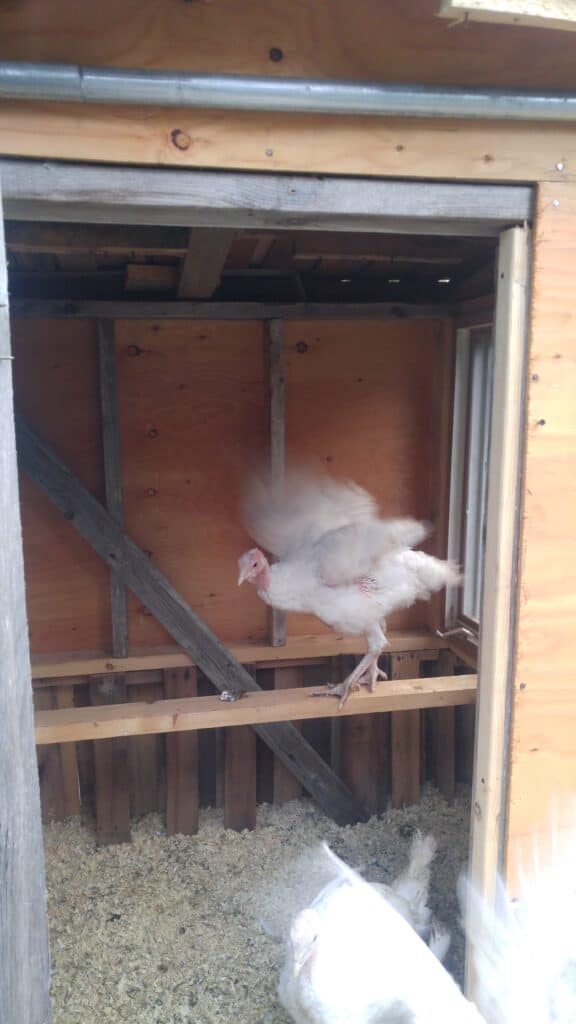
Turkeys require:
- Larger coops with more headroom
- Wider and sturdier roosts
- More ventilation due to their size
Chickens are easier to house and adapt well to smaller coops and runs.
One important note: while turkeys and chickens can free-range together, it’s not recommended to keep them confined in the same run due to health risks (like blackhead disease).
Behavior and Temperament
Both turkeys and chickens are social birds, but their personalities are a bit different.
Chickens:
- Independent
- Curious and busy
- Easy to manage in flocks
Turkeys:
- Extremely friendly and curious
- Often more interactive with people
- Known to follow you around like pets
From experience, both can be sweet birds, especially when raised from a young age. Turkeys just tend to be a bit more… involved in your daily life.
Purpose: Meat vs Eggs
Your goals play a big role in choosing between turkeys and chickens.
Chickens are typically raised for:
- Consistent egg production
- Meat (especially broiler breeds)
Turkeys are primarily raised for:
- Meat production
While chickens provide a steady supply of eggs, turkeys are more of a seasonal investment for a larger meat yield. And the best turkey dinner you will ever eat.
Cost and Time Investment
Turkeys generally cost more to raise than chickens.
Here’s why:
- Higher feed consumption
- Longer grow-out period
- More space required
While turkeys produce more meat per bird, they take longer to raise compared to meat chickens, which are bred for rapid growth.
Chickens, especially layers, offer a quicker return through eggs. You don't have to buy eggs, and you can sell the excess at a roadside stand; prices in my area (Southern Nova Scotia) are between $4-6 a dozen.
Can You Raise Turkeys and Chickens Together?
Yes—but with caution.
- Free-ranging together is usually fine
- Keeping them in the same enclosed run is not recommended
- Turkeys are susceptible to diseases that chickens can carry without symptoms
If you plan to raise both, it’s best to:
- Keep separate housing
- Use separate feeders and waterers
- Practice good biosecurity
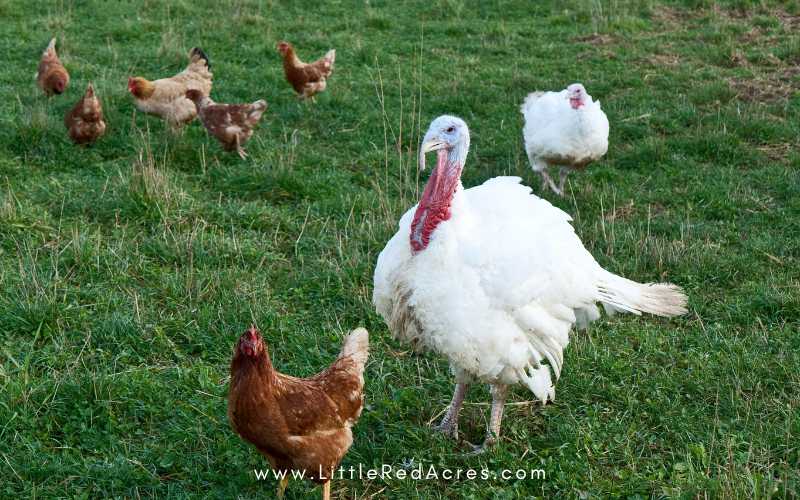
When comparing raising turkeys vs chickens, it really comes down to your homesteading goals.
Choose chickens if you want:
- Daily eggs
- Lower costs
- Easier care for beginners
Choose turkeys if you want:
- Larger meat yield
- A more seasonal project
- Friendly, interactive birds
And honestly? You don’t always have to choose. Many homesteaders (us included) eventually raise both.
Frequently Asked Questions
Which are easier to raise chickens or turkeys? Except for the space that raising turkeys requires turkeys are easier to keep than chickens. They are docile, regal birds that move across the yard with a certain air of sophistication.
Do turkeys bond with humans? Turkeys form strong social bonds and show affection towards one another. Turkeys are gentle creatures who enjoy socializing with human companions and protecting other turkeys with whom they've bonded.

Want More?
Raising Turkeys and Chickens Together
Increase Egg Production in Chickens: A Guide to Maximum Yield
Chicken First Aid: Keeping Medical Kit for Chickens