Predator‑Proof Your Quail Enclosure For Safer Birds
Inside: Predator-proof your quail enclosure with beginner-friendly tips to protect quail from raccoons, hawks, digging predators, and more.
Keeping quail safe is one of those things you don’t fully appreciate until you’ve had a close call—or worse. If you’re new to raising quail, predator protection can feel overwhelming at first, but it doesn’t have to be complicated or expensive. There are just a few things that you might not think of.

This post may contain affiliate links, see my disclosure policy for more information.
Predator‑Proofing Your Quail Enclosure
Quail are quiet, ground‑dwelling birds, which makes them easy targets for a long list of predators. The good news? With the right setup and a little planning, you can dramatically reduce your risk and sleep better at night knowing your birds are secure.
I'm going to walk you through how to predator‑proof your quail enclosure step by step, whether you’re raising Coturnix in a backyard hutch or keeping quail on a small homestead.
Why Quail Need Extra Predator Protection
Compared to chickens, quail are:
- Smaller and easier to grab
- Poor flyers with limited escape ability – quail, in my experience, tend to fly straight up in the air, land, and freeze for a few moments before trying to fly again
- Often kept closer to the ground
- Quieter, which means predators can stalk unnoticed
Predators don’t just come at night, either. Daytime threats are just as real, especially if your enclosure has weak spots.
Beginner note: Quail don’t defend themselves the way chickens sometimes do. Your enclosure is their only real protection.
Common Quail Predators to Plan For
Knowing what you’re protecting against helps you design smarter defenses.
Ground predators
- Raccoons – our biggest threat to quail, in fact, not having quail at the moment, we haven't had any raccoons on our property
- Foxes
- Coyotes
- Skunks
- Weasels and mink
- Rats and mice
Aerial predators
- Hawks
- Owls
Domestic threats
- Dogs
- Cats
Each of these predators exploits different weaknesses—digging, squeezing, climbing, or reaching—so your enclosure needs layered protection.
Start With Strong Wire (This Matters More Than Anything)
If there’s one place not to cut corners, it’s wire.
Use Hardware Cloth, Not Chicken Wire.
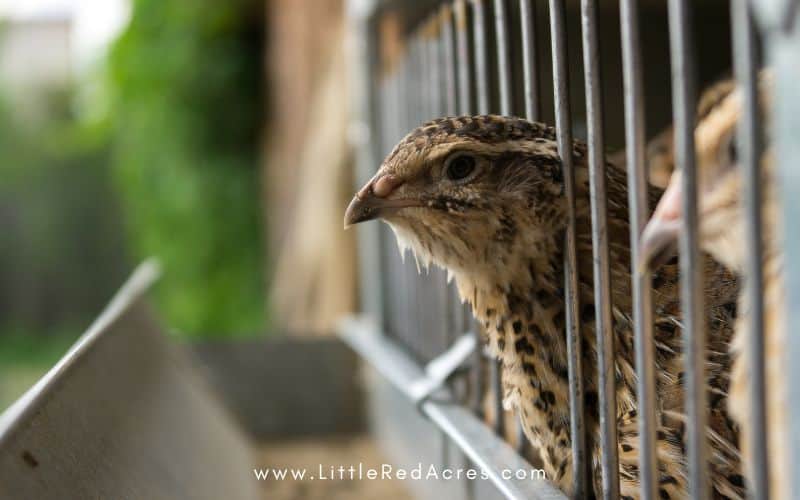
Chicken wire is designed to keep chickens in, not predators out. Raccoons, rats, and even determined dogs can rip right through it. AND quail can stick their heads through the holes.
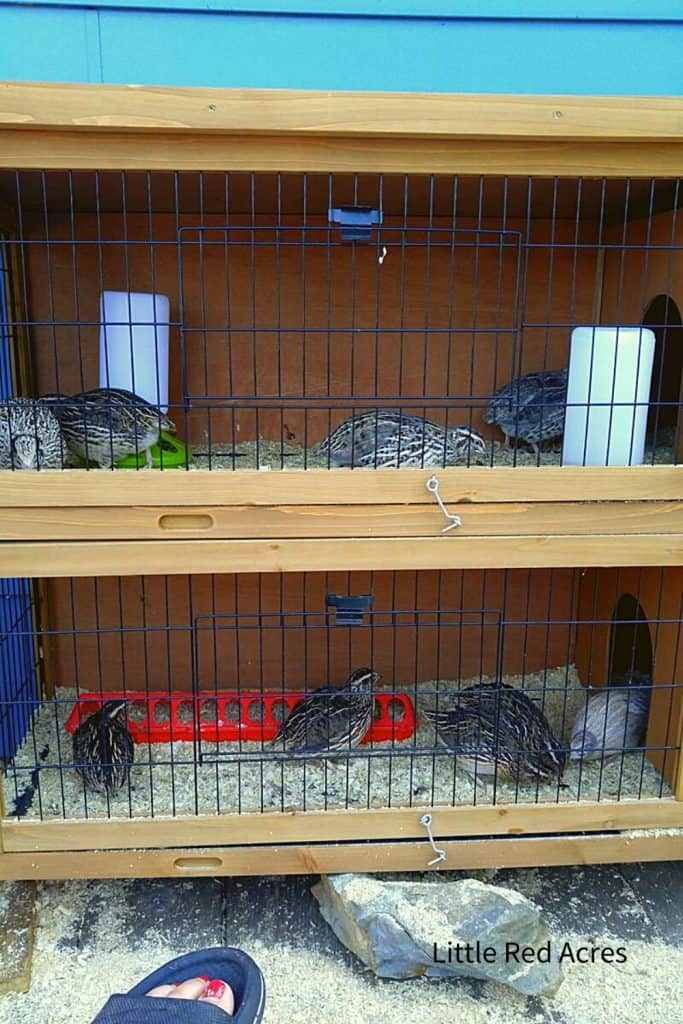
Learn from our mistake: The next image is the first cage we had for quail. It worked amazingly well. Expect for the fact that the quail could stick their heads through the wire. Our dogs and cats didn't bother them so we didn't think anything of it until I got up one morning to decapitate quail. A raccoon had come through and killed a good number of them. We then knew we had to use hardware cloth, and covered the existing wire with it.
Best choice:
- ½‑inch hardware cloth (galvanized)
This size:
- Keeps out rats and snakes
- Prevents raccoons from reaching in
- Holds up against chewing and clawing
For extra protection, use 16–19 gauge hardware cloth.
Secure the Bottom: Stop Digging Predators
A lot of predator attacks happen from below; mink and rats, for example, will attack from below.
I do not recommend raising quail on the ground. I recommend raised cages. They aren't birds that need a lot of head room, so you can easily use stacked cages and really get your bang for your buck out of raising them and the small footprint that they leave on a homestead.
Options That Work
Wire apron (recommended)
Extend hardware cloth 12–24 inches outward from the base of the enclosure and secure it flat on the ground. Cover with soil, mulch, or gravel. This is something we do in our chicken runs.
Solid flooring
If you’re using a raised hutch, a solid floor with droppings trays adds excellent protection. Mke sure trays are latched so raccoons don't slide them out. They are too damn smart.
Avoid bare ground enclosures without wire underneath—predators will find that weakness fast.
Roof Protection: Hawks, Owls, and Climbers
An uncovered top is an open invitation. This goes for all birds!
- Fully enclose the roof with hardware cloth or welded wire
- Secure it tightly—no sagging or loose edges
- If using a tarp or metal roof, make sure the sides are still fully wired
Owls can tear through flimsy netting, so avoid bird netting alone.
Doors, Latches, and Human Error
Predators love doors—especially raccoons.
Predator‑Proof Latches
Raccoons can:
- Open simple hooks
- Slide bolts
- Lift loose lids
Best latch options:
- Spring‑loaded carabiners
- Two‑step latches
- Padlocks (even small ones)
Always double‑check doors at dusk. Many losses happen because a door was “just not fully latched.”
Beginner tip: Most predator losses happen because of simple latch mistakes, not bad builds.
Eliminate Reach‑In Gaps
If a predator can get a paw through, it can grab a quail.
- Keep wire spacing no larger than ½ inch
- Reinforce corners and seams
- Overlap wire panels by at least 2 inches
- Secure with screws and washers, not staples alone
Pay special attention to feeding and watering access points.

Nighttime Security: When Risk Is Highest
Most predators hunt at night.
Extra nighttime precautions:
- Close quail into a fully enclosed sleeping area if you feel that there is a heightened risk – quail do not go to bed naturally at night like chickens.
- Use motion‑sensor lights around the enclosure
- Avoid leaving feed out overnight (attracts rodents)
Battery‑powered solar motion lights are an easy, low‑maintenance upgrade. I have these in each of my chicken runs.
Rodent Control Is Predator Control
Rats and mice don’t just steal feed—they attract larger predators.
- Store feed in metal containers with tight lids
- Use no‑spill feeders
- Clean up spilled grain regularly
- Elevate feeders when possible
If rodents can live comfortably near your quail, bigger predators will follow.
Placement Matters More Than You Think
Where you put your enclosure can either help or hurt your efforts.
Choose a location that:
- is visible from the house
- is away from tree lines or tall grass
- has good drainage
- is not next to fences predators can climb
Avoid placing quail enclosures near compost piles, barns with feed, or brush piles.
Layers Beat Perfection
Predator‑proofing a quail enclosure doesn’t have to be perfect on day one—especially for beginners. Focus on strong basics, then improve over time as your setup grows.
Predator‑proofing isn’t about building a fortress—it’s about layers. Strong wire, secure bottoms, covered tops, smart latches, and good placement all work together.
If one layer fails, another should still stand between your quail and danger.
A well‑protected quail enclosure means fewer losses, less stress, and a healthier, more productive covey—and that’s worth every extra screw and inch of hardware cloth.
Frequently Asked Questions About Predator‑Proofing Quail Enclosures
What is the best wire for a predator‑proof quail enclosure? ½‑inch galvanized hardware cloth is the best option for most quail setups. It keeps out rats, snakes, raccoons, and other common predators while still allowing good airflow.
Is chicken wire safe for quail? No. Chicken wire is not predator‑proof. It can be chewed through, ripped open, or pulled apart easily by raccoons, dogs, and other predators.
Do quail need a roof on their enclosure? Yes. A fully covered top is essential to protect quail from hawks, owls, and climbing predators. Netting alone is not strong enough.
How do I stop predators from digging into my quail pen? Using a wire apron or buried hardware cloth around the perimeter is the most effective solution. This prevents predators from tunneling underneath.

Want More?
Guide to Raising Quail: Tips for Beginners Raising Quail for Eggs, Meat, or Profit
Why Do Birds Dust Bath? And How to Make the Perfect One
Raising Quail vs Chicken On Your Homestead