Raising Quail in Small Spaces: A Practical Guide to Keeping Quail in Urban & Suburban Areas
Inside:
Raising Quail in Small Spaces is one of the most practical ways to produce your own eggs and meat without needing acreage. Whether you live in town, in a subdivision, or on a small suburban lot, quail offer an efficient and surprisingly manageable way to step into self-sufficiency.

This post may contain affiliate links, see my disclosure policy for more information.
Raising Quail in Small Spaces: A Practical Guide to Keeping Quail in Urban & Suburban Areas
Unlike chickens, quail are compact, quieter, and require far less room. That makes them especially appealing for people who feel limited by space but still want to raise poultry.
If you’ve ever looked at your patio, small backyard, or even a shed and wondered, Could I really raise birds here? — the answer might be yes.
Why Quail Work So Well in Small Areas
One of the biggest advantages of raising quail is their size. Coturnix quail, the most common breed for backyard keepers, mature quickly and begin laying eggs at just 6–8 weeks of age. They don’t need nesting boxes or perches like chickens, and they don’t require large runs to stay productive.
Because they are ground birds, quail are perfectly content in appropriately sized enclosures. They don’t need to roam large areas to stay healthy. As long as they have enough room to move comfortably, access to feed and water, and a clean environment, they thrive.
In many municipalities where chickens are restricted, quail are either allowed or fall into a gray area because they’re classified differently. That makes them especially attractive for suburban homesteaders.

How Much Space Do Quail Actually Need?
When raising quail, space efficiency is everything. A good general rule is to provide at half a square foot to one square foot per bird. While that may sound small, it adds up quickly in terms of productivity. For reference chickens require 3–4 square feet per bird inside the coop and 8–10 square feet per bird in an outdoor run.
For example, a simple 2-foot by 3-foot enclosure can house around six quail comfortably. If you build vertically using stacked cages, you can triple your capacity without increasing your footprint. A setup no larger than a bookshelf can produce dozens of eggs each week.
Of course, more space is always better. Overcrowding leads to stress, feather picking, and reduced egg production. In tight areas, proper planning matters more than square footage. Quail can be very nasty to each other, I'm talking about scalping and end of life.
Housing Considerations for Quail in Small Spaces
Housing design becomes even more important when space is limited.
Quail have a natural instinct to “flush” upward when startled. In tall enclosures, this can lead to head injuries. That’s why many experienced keepers recommend cages under 12 inches tall or enclosures with soft netting across the top.
Ventilation is another key factor. In small urban settings, airflow prevents moisture buildup and reduces ammonia from droppings. Poor ventilation is usually what causes odor — not the birds themselves.
Many small-space quail keepers prefer wire-bottom cages with removable dropping trays. This allows waste to fall through, making cleaning faster and more efficient. In compact areas, ease of cleaning makes a big difference in long-term success.

Managing Odor in Urban & Suburban Settings
Odor control should be at the top of your priority list — especially if neighbors are nearby.
The good news is that quail are not naturally smelly animals. Odor typically comes from accumulated waste. Cleaning trays every one to three days, keeping feed dry, ensuring airflow, and avoiding overcrowding will keep smells minimal.
Consistency matters more than size. A small, well-maintained setup will smell far less than a larger, neglected one.
What About Noise?
Noise is often a concern in suburban areas. Compared to chickens, quail are significantly quieter.
Hens make soft, pleasant cooing sounds. Males do crow, but their call is shorter and much less booming than a rooster’s. If noise is a concern, many small-space keepers simply choose to raise hens only. I LOVE the male crow, it's the reason I get quail again and again.
For most neighborhoods, quail go largely unnoticed.

Feeding Quail in Small Spaces
Because quail are confined to smaller enclosures, their diet must be carefully managed. High-protein game bird feed (20–24% protein for layers) should be the foundation of their nutrition.
In tight quarters, it’s best to limit excessive treats. Extra scraps can create waste buildup and moisture issues. Keeping feeders elevated and waterers clean prevents spills that contribute to odor and bacteria.
Simple, consistent feeding routines make small-space setups far easier to manage.
Using Vertical Space to Your Advantage
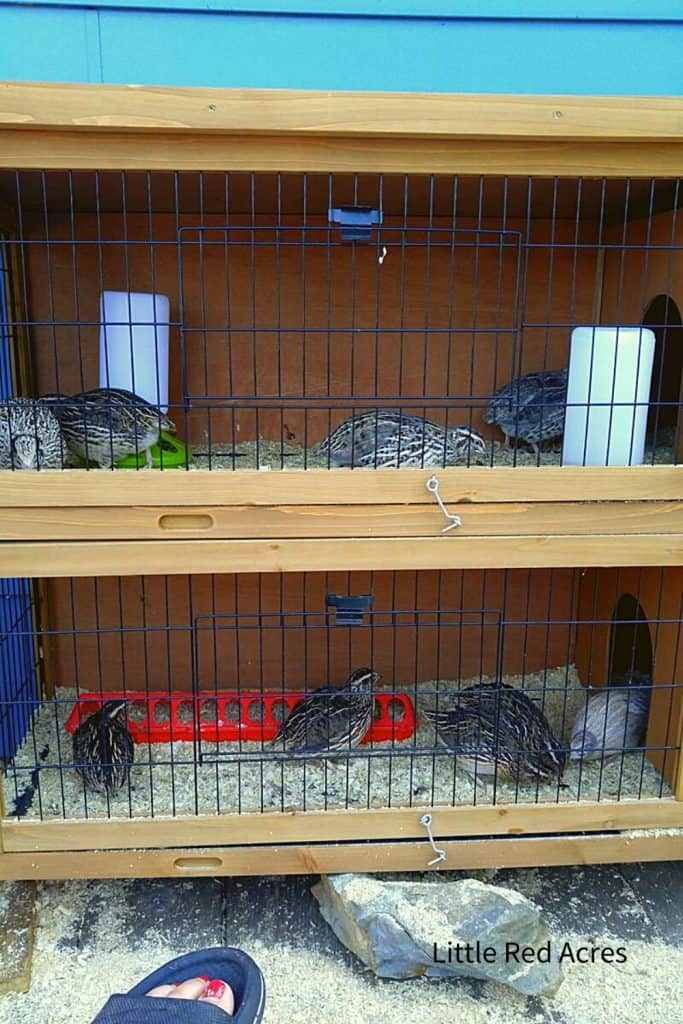
One of the smartest strategies for raising quail in small spaces is thinking vertically. Stackable cage systems allow you to separate breeding groups, organize birds by age, and increase production — all without expanding outward.
This approach works especially well in sheds, garages, greenhouse corners, or covered patios. Even a compact three-tier system can provide a steady supply of eggs for a family.
When space is limited, vertical planning is often the difference between frustration and efficiency.
Can You Raise Quail on a Patio or Balcony?
In some areas, yes — but local bylaws should always be checked first.
Raising quail on patios or balconies requires attention to predator protection, weather exposure, and sanitation. Proper housing, discretion, and cleanliness go a long way toward keeping peace with neighbors.
Many urban keepers find that quail are far less noticeable than people expect.
The Reality of Small-Space Quail Keeping
There are clear advantages to raising Coturnix quail: minimal land requirements, fast egg production, efficient feed conversion, and lower noise levels compared to chickens.
However, smaller spaces do require intentional management. Cleaning must be consistent. Ventilation must be maintained. Overcrowding cannot be ignored.
But for many urban and suburban homesteaders, the trade-off is well worth it.
Raising quail in small spaces proves that you don’t need acres to take a step toward food independence. With thoughtful housing, proper ventilation, and consistent care, quail can thrive in backyards, patios, sheds, and other compact environments.
If you’ve been holding back because your yard isn’t big enough, quail might be the practical, efficient solution you’ve been looking for.
Sometimes self-sufficiency doesn’t start with more land — it starts with using the space you already have wisely.
Frequently Asked Questions About Raising Quail in Small Spaces
How many quail can I keep in a small space? When raising Quail in Small Spaces, plan for at least 1 square foot per bird. A 2’ x 3’ enclosure can comfortably house about 6 quail. More space reduces stress and improves egg production.
Can you raise quail in a backyard? Yes, raising Quail in Small Spaces like suburban backyards is very common. Quail require less room than chickens and are often allowed in areas where chickens are restricted. Always check local bylaws before starting.
Are quail good for urban areas? Quail are ideal for urban and suburban settings because they are quiet, compact, and efficient. Hens make soft cooing sounds, and many keepers avoid males to reduce noise.
Do quail smell in small spaces? Quail themselves do not smell, but poor cleaning can cause odor buildup. When raising Quail in Small Spaces, frequent cleaning, proper ventilation, and avoiding overcrowding are key to preventing ammonia smell.

Want More?
Common Feeding Mistakes to Avoid with Quail
Predator‑Proof Your Quail Enclosure For Safer Birds
Guide to Raising Quail: Tips for Beginners Raising Quail for Eggs, Meat, or Profit